 Plain Candle

About this book
The Complete Trading Handbook starts from zero and goes a long way. The first part explains how markets work: who is on the other side of your trade, how a price forms, how orders, brokers, costs and leverage really work, and why most beginners lose.
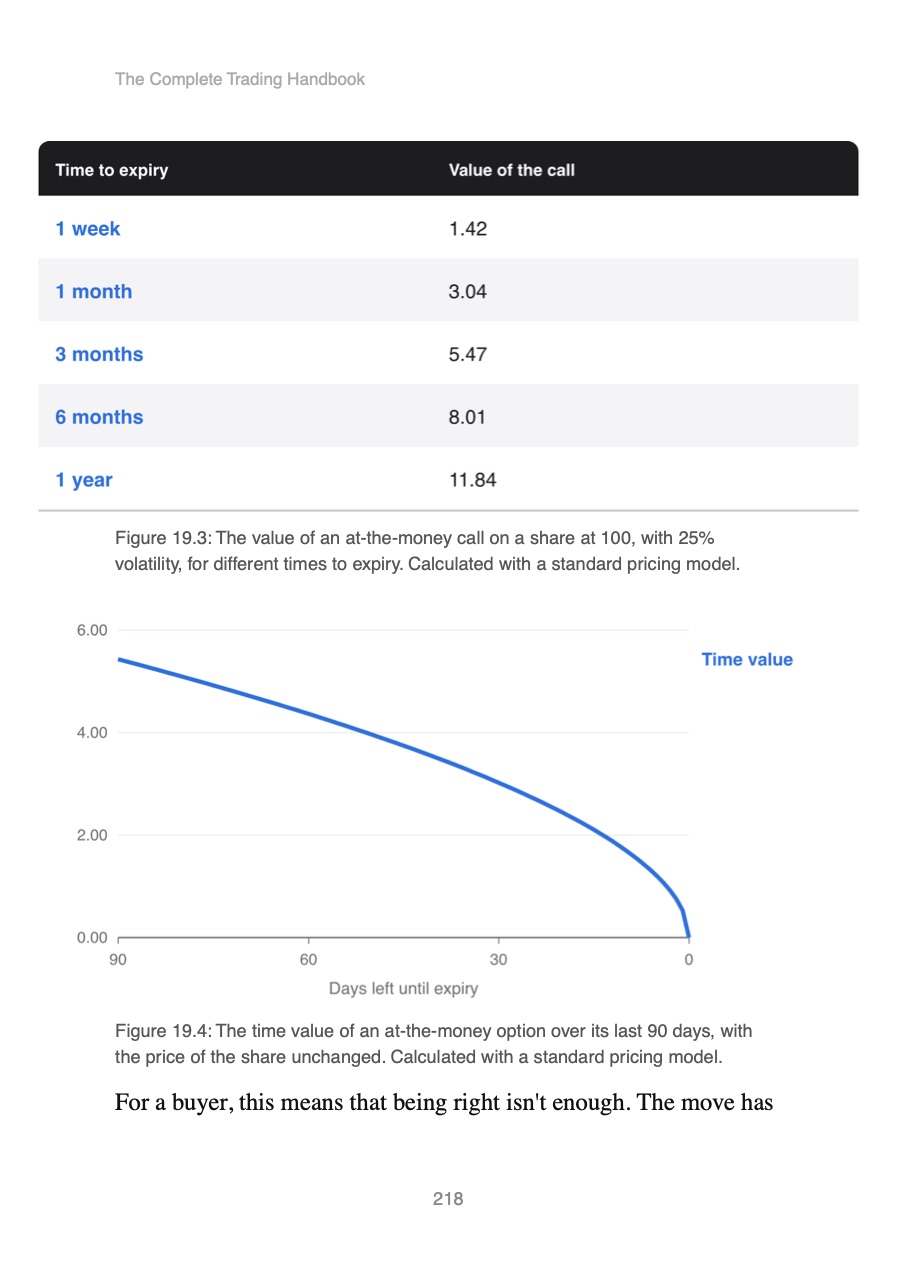
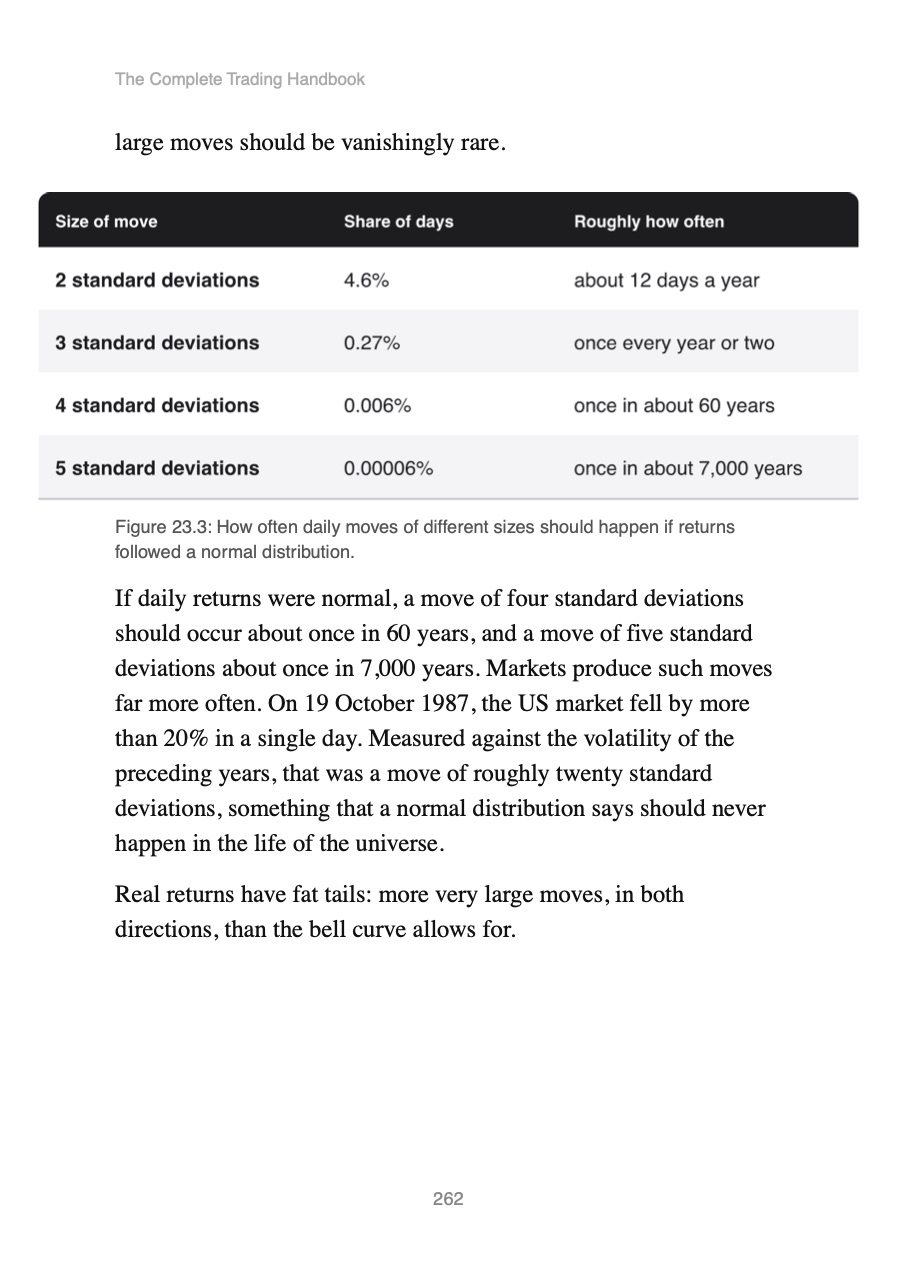
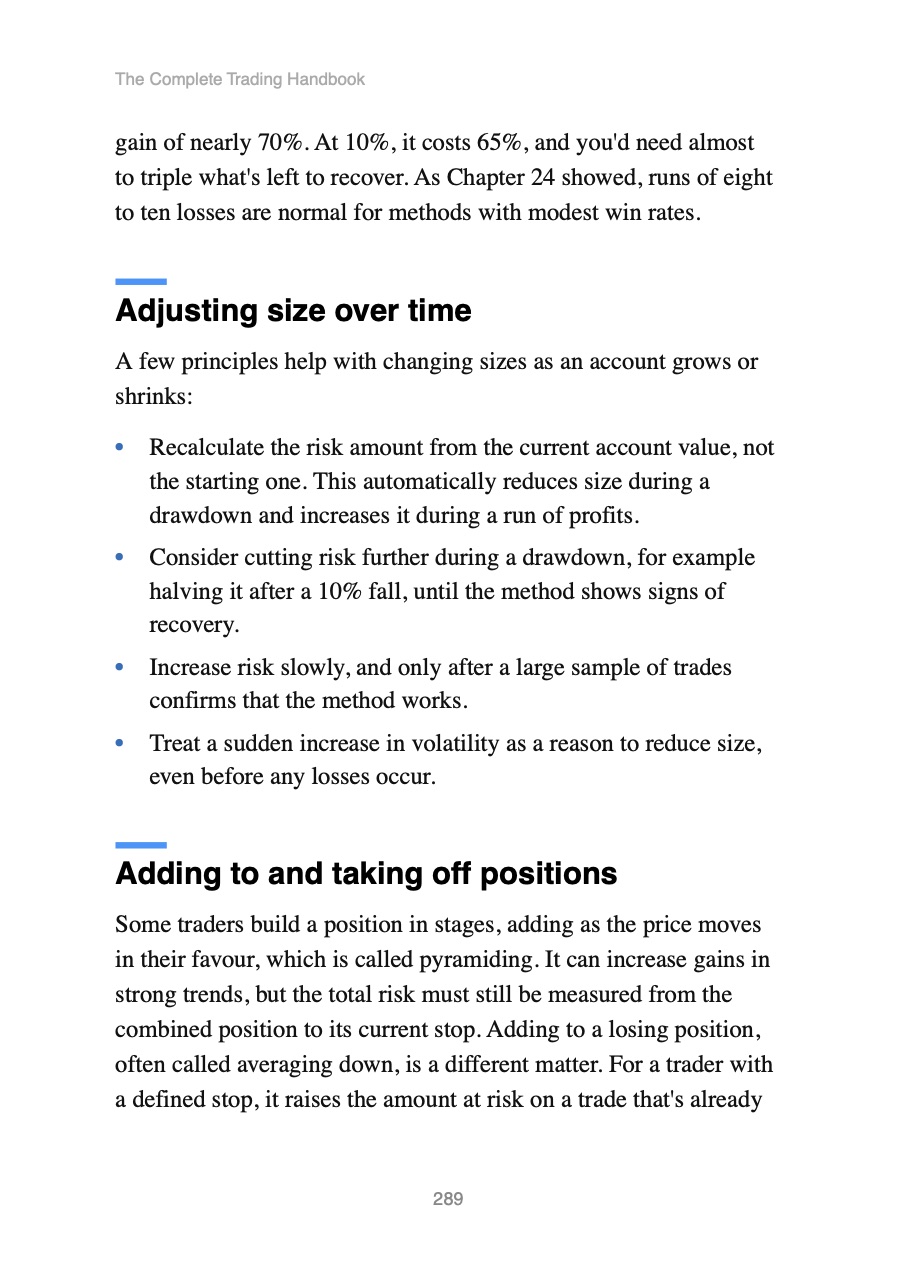
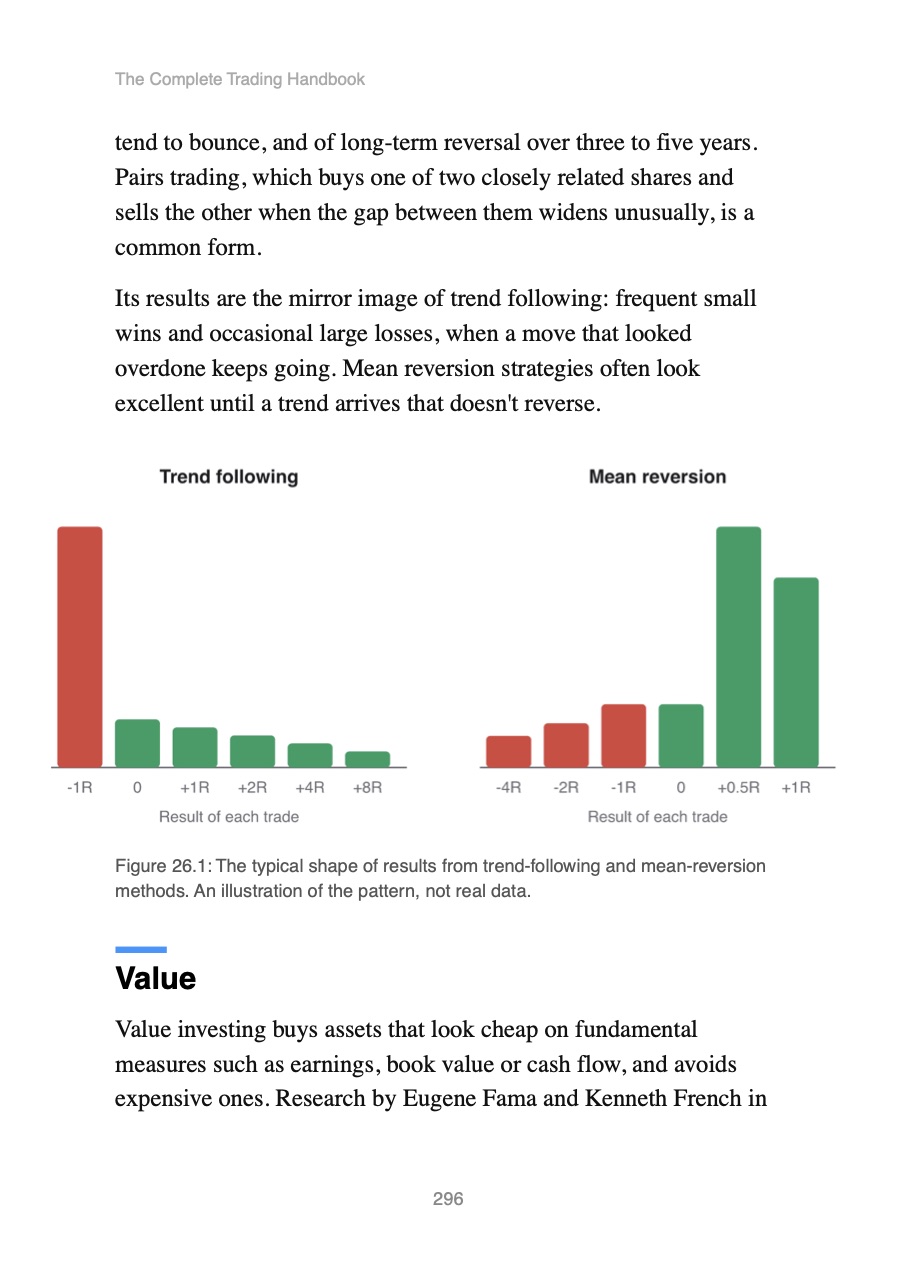
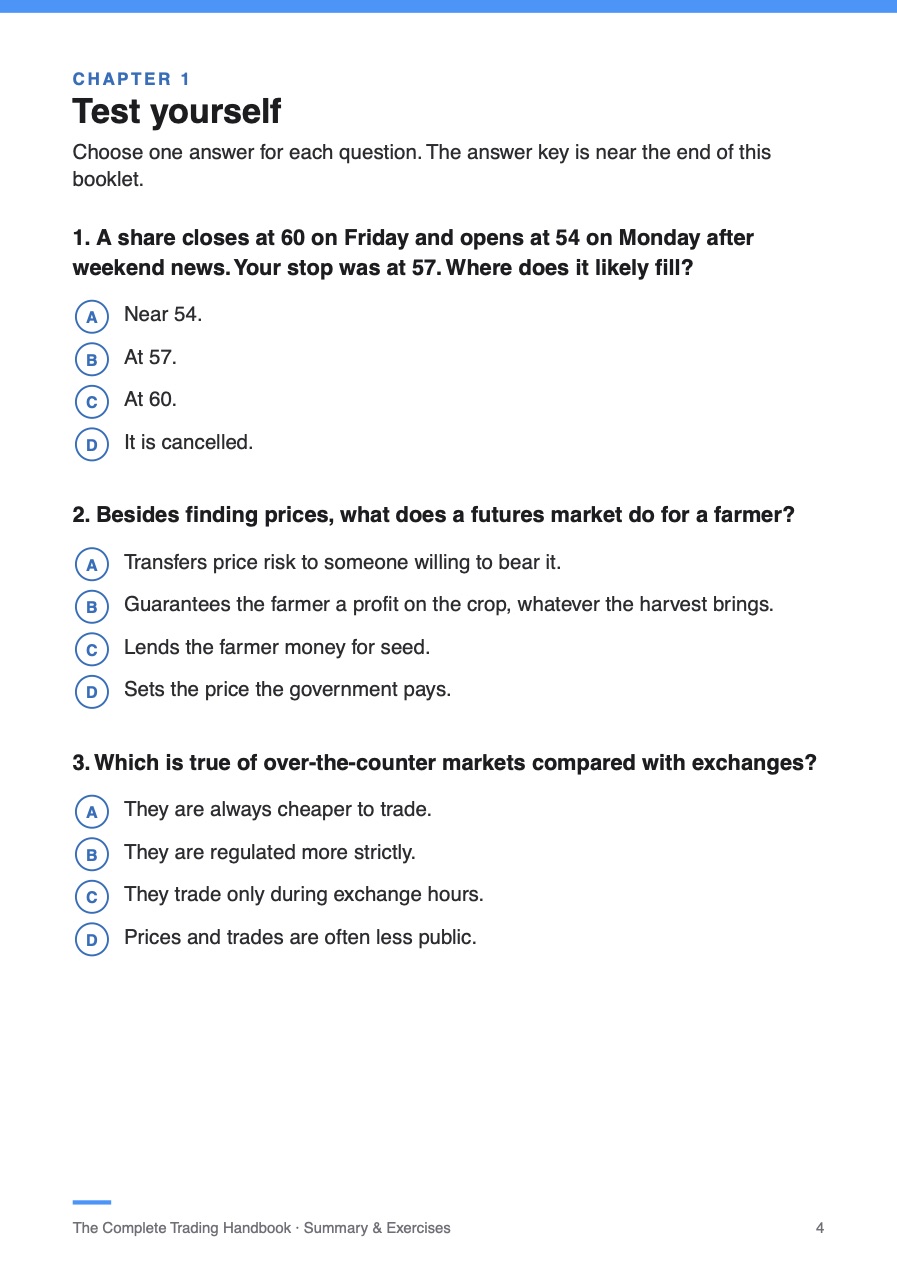
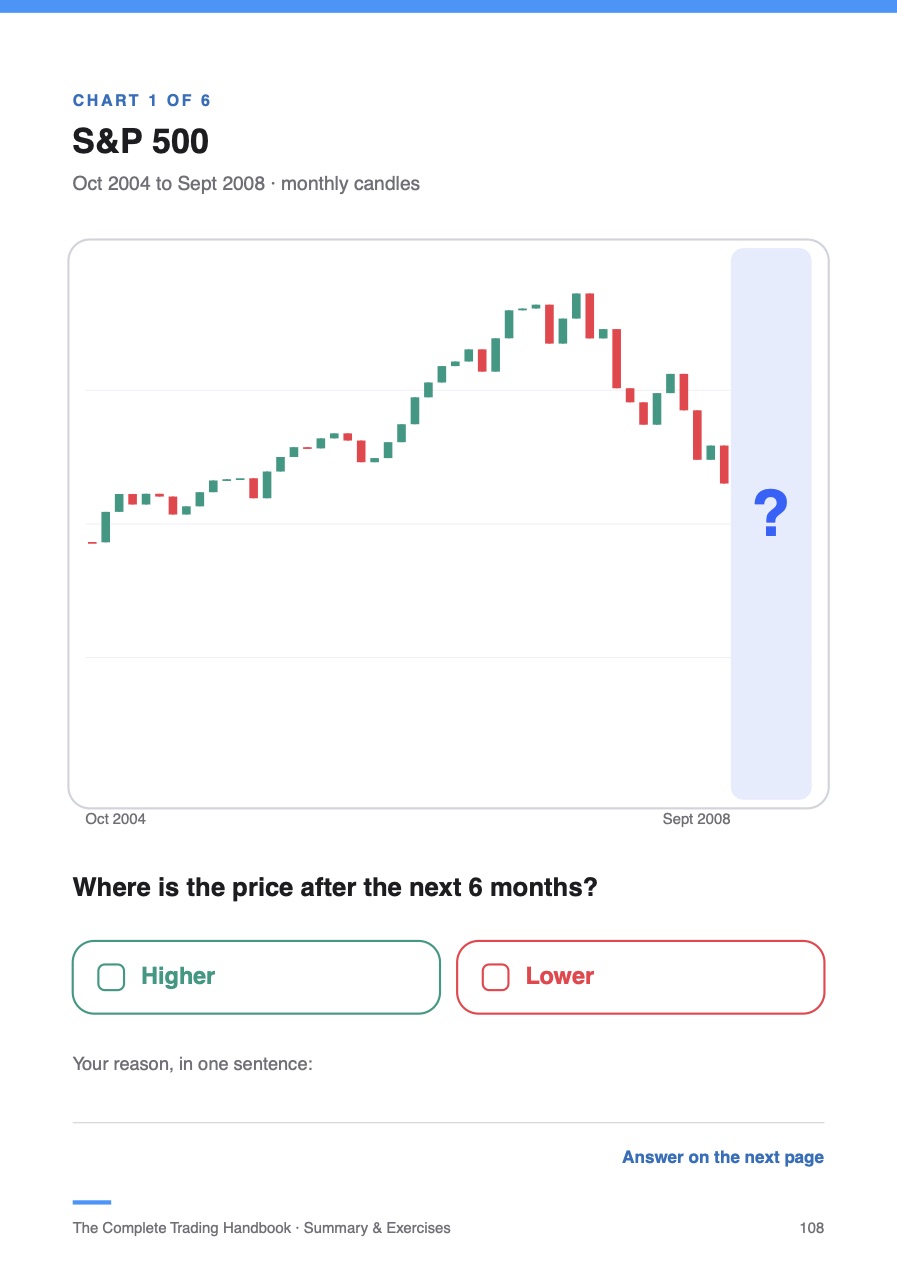
The second part covers what professionals use every day: how shares and bonds are valued, how futures and options work and are priced, how trades are executed, volatility and fat tails, expectancy and the statistics of trading, position sizing and the Kelly criterion, the main strategy families and the evidence behind them, central banks and the economic calendar, backtesting, a written trading plan, and long-term portfolio building. It uses real market data, with the market and dates named on every real-price chart, worked examples you can check, and exercises at the end of every chapter.
See all chapters
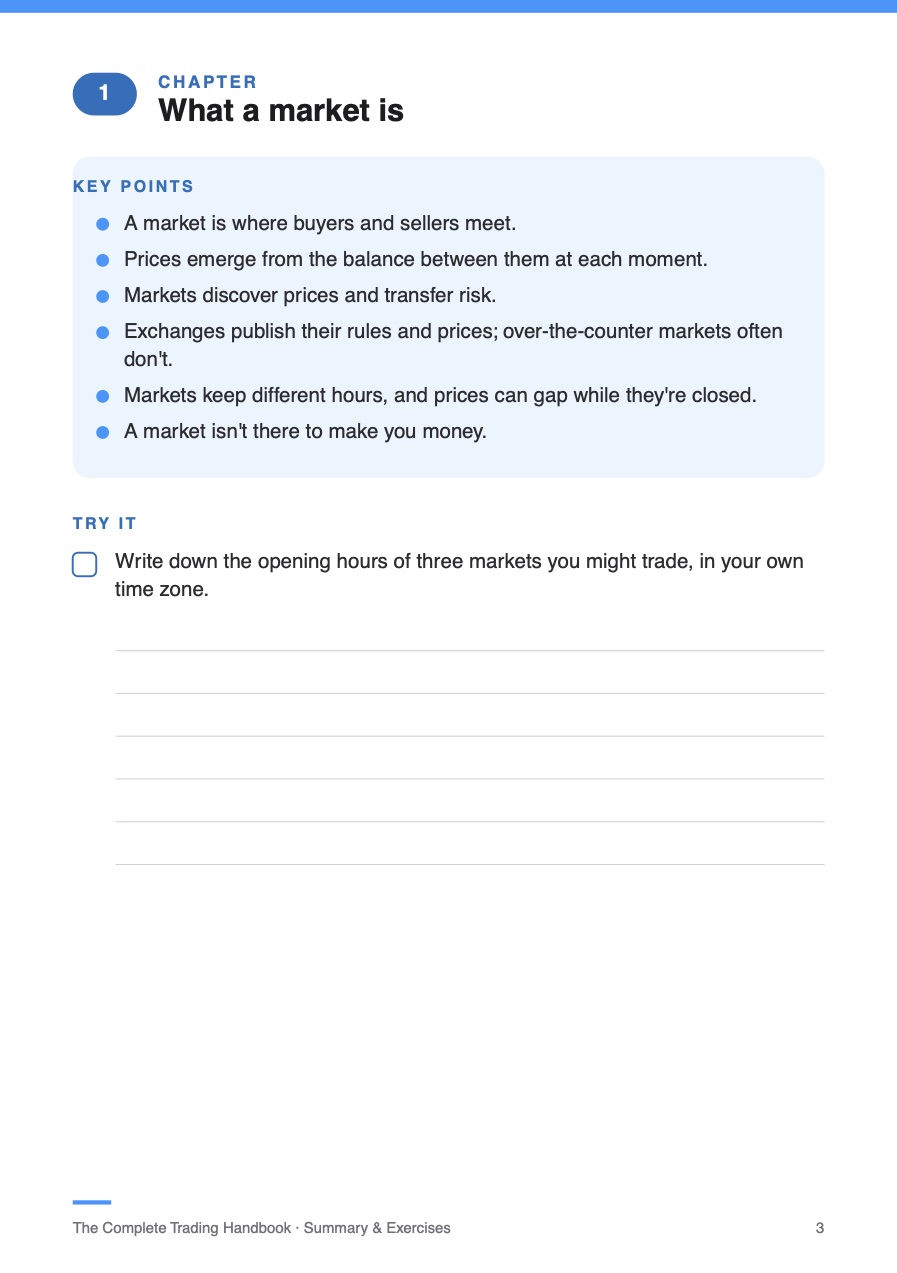
- What a market is
- What people actually trade
- Investing, trading and gambling
- Who is on the other side of your trade
- How a price forms
- Why prices move
- Reading a chart for the first time
- Orders: market, limit and stop
- Long and short: the two directions
- Brokers and what they do
- What trading really costs
- Leverage in plain English
- How much can you lose?
- Why most beginners lose
- Your own brain
- What a share is worth
- Bonds and interest rates
- Futures in depth
- Options: how they work
- Options: risk and strategies
- Currencies in practice
- How trades really happen
- Volatility and fat tails
- Expectancy and the statistics of trading
- Position sizing in depth
- Strategy families and the evidence
- The economy, central banks and the calendar
- Backtesting without fooling yourself
- The trading plan and the review
- Building a long-term portfolio
- Scams and sales pitches
- Learning without risking money
- Questions to ask before you risk real money
Who it's for
- You are new to markets and want one book that takes you all the way
- You know the basics and want the professional toolkit: valuation, options, volatility, sizing and testing
- You want to judge trading methods and sales pitches with real evidence
Who it's not for
- You want trade signals or a system that promises profits
- You want a quick read: this is a long, thorough handbook
Recommended next


 Beginner
Risk
Risk Management First
Losses are part of trading. This book is about keeping them small enough to think clearly.
 Intermediate
Technical analysis
Reading Charts Without the Hype
A chart is a record of what already happened. Learn to read it without expecting it to predict.


 Intermediate
Psychology
The Psychology of Trading
Fear, regret and overconfidence affect everyone. Knowing how they work is the first step.